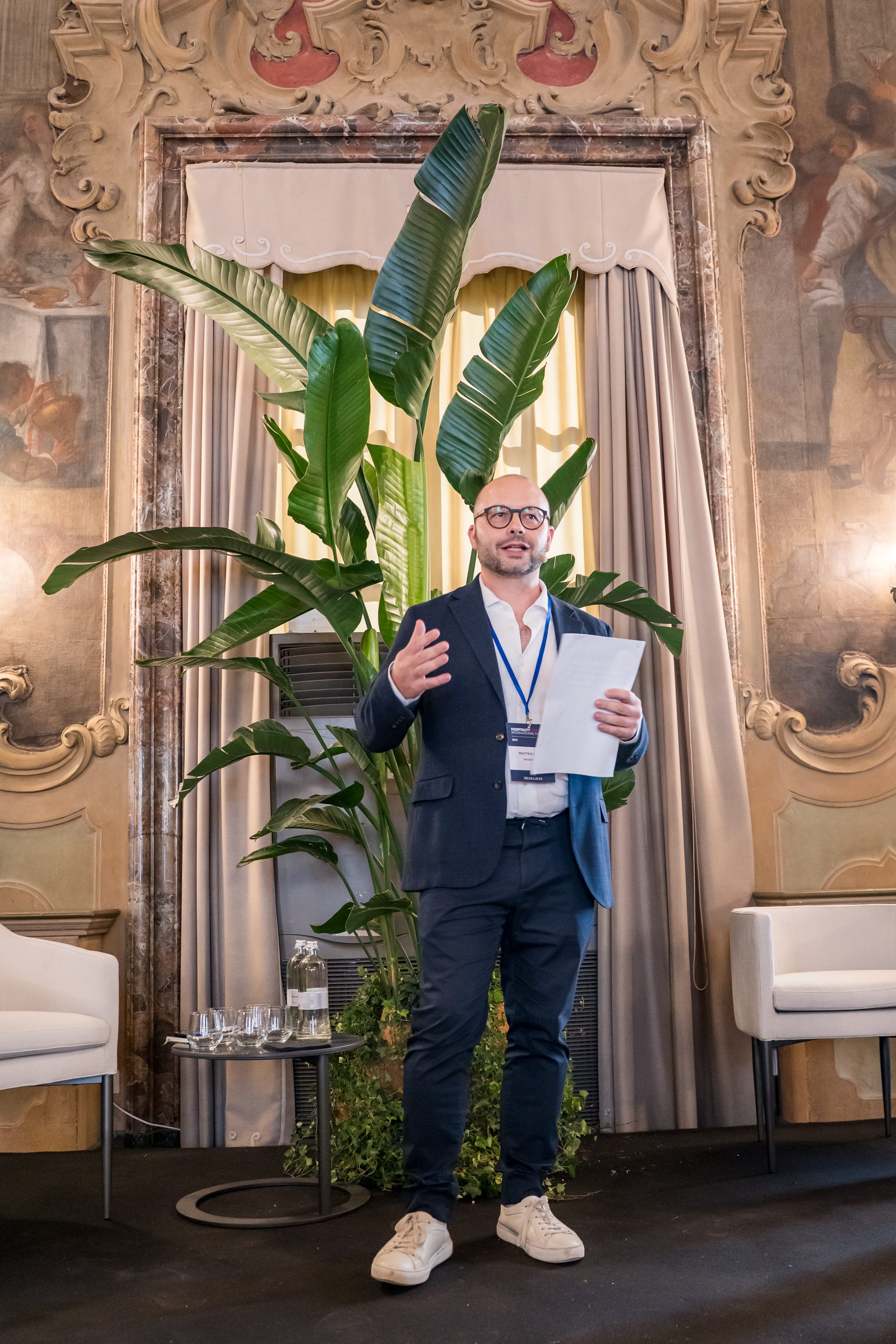

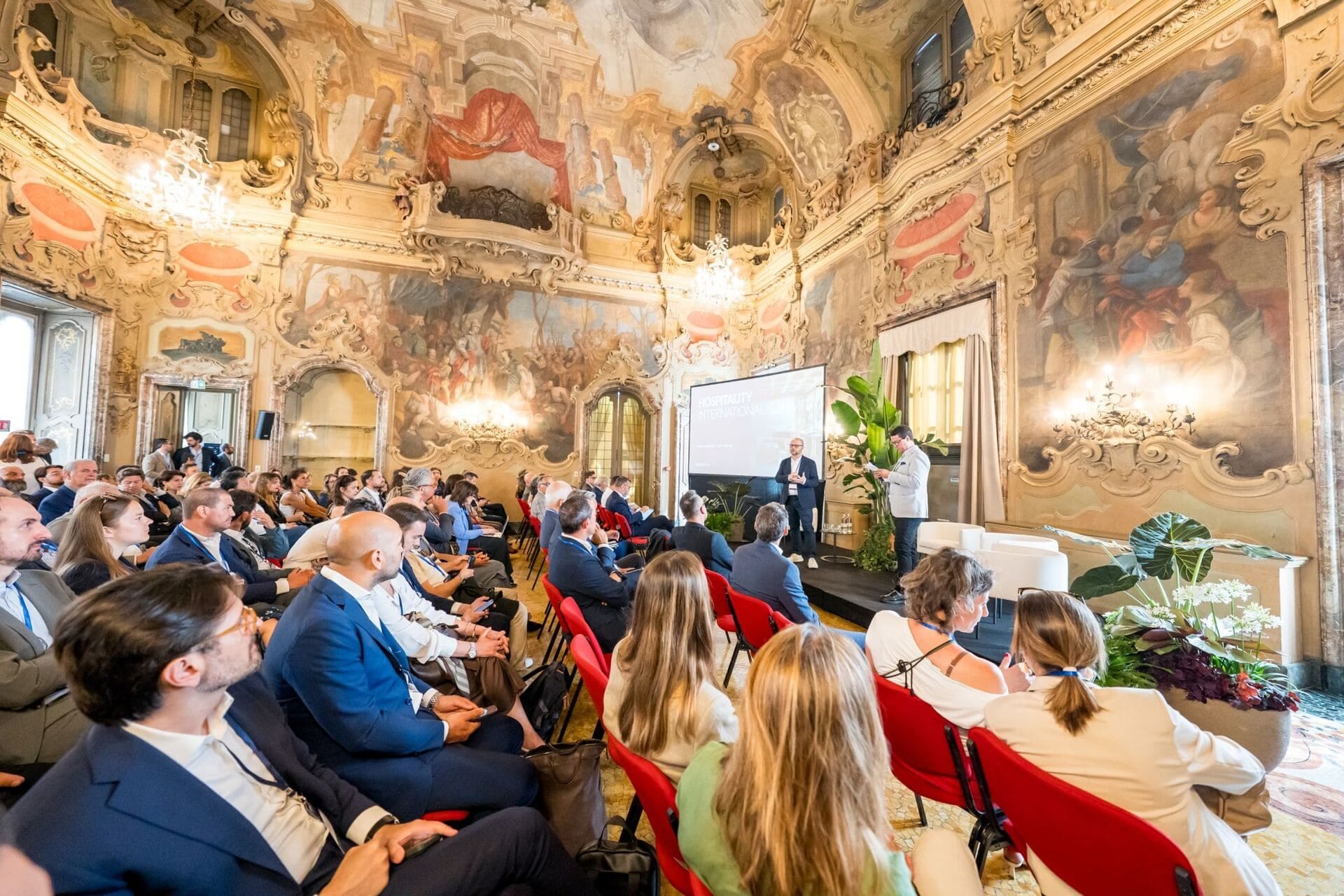
There are hospitality events that look better in photographs than they sound in the room, which is a polite way of saying that they are often built around the familiar choreography of arrival, badge, coffee, speech, applause, networking face, glass of something, LinkedIn post and disappearance. The Medelhan Hospitality Club International Summit was not that, and this is perhaps the highest compliment one can pay to an event in a sector where words such as “luxury”, “experience”, “destination”, “wellness” and “authenticity” are now so overused that they occasionally need a quiet week in the countryside to recover their meaning.
I say this with a small personal bias, because in a very modest way I have felt part of the Medelhan story since its early days, but also with enough professional cynicism to recognise the difference between a well-dressed gathering and a genuinely useful conversation. So, first, credit where it is very much due: congratulations to Roberto Cuneo, to the ever-reliable Stella Manferdini, and to the whole Medelhan team for organising an event that combined the beauty of the setting, the weight of the participants and, most importantly, a sincere appetite for concrete discussion. That last point matters. In a world where many conferences are essentially designed to give people a sophisticated excuse to admire themselves in public, this summit felt different because the people in the room did not need to prove they had arrived. They had. And perhaps precisely for that reason, they could actually talk.
The framing of the day was particularly sharp: Hospitality & Lifestyle Developments in the Mediterranean: The Lake Como Case and Beyond. Lake Como was not treated as a postcard, nor as a decorative cliché with boats, villas and international guests pretending they have always understood risotto. It was treated as a stress test for the future of premium Mediterranean hospitality: a destination where scarcity, global demand, branded luxury, wellness ecosystems, capital flows and local identity collide in a very beautiful, very expensive and very revealing way.
The opening remarks captured this perfectly. Italy’s hospitality investment cycle is no longer a niche enthusiasm for romantics with a spreadsheet. Hotel investment volumes reached approximately €2.1 billion in 2024, up 30% compared to the previous year, with more than half of total investment volume originating from international investors. Preliminary estimates then showed further growth in 2025, while forecasts for 2026 pointed towards one of the strongest hospitality investment cycles Italy has seen in more than a decade. Yet the more interesting story is not only how much capital is arriving, but where that capital wants to go. The old gravitational pull of Milan, Rome and Venice remains important, of course, but high-end resort destinations, structurally constrained markets and lifestyle-led ecosystems are increasingly at the centre of the conversation.
Lake Como is therefore fascinating precisely because it is not large. It is scarce. And scarcity, when combined with global desirability, heritage, environmental limits and pricing power, becomes one of the most powerful forces in hospitality. This was the common thread of many discussions throughout the day: how do you create value when you cannot simply build more? How do you grow without vulgarising the place that created the value in the first place? How do you bring in global brands, institutional capital, design ambition, wellness platforms and smart technology without producing something that is efficient, expensive and emotionally dead?
The first panel I moderated, “Lake Como as a Market Test for Branded Luxury”, went straight to this question. With Gianleo Bosticco of Marriott International, Ettore Cavallino of Accor and Marco Comensoli of Colliers, the discussion was not about whether Lake Como is attractive - that would be a very short panel and a fairly pointless one - but about when visibility becomes a real development pipeline, when a global brand creates value, and when independence may still be the better answer. The interesting tension was between brand power and owner autonomy, between international standards and local authenticity, between trophy appeal and the operational reality of capex, constraints, seasonality and long-term return. In other words, the conversation moved quickly from “isn’t Lake Como fabulous?” to “what actually makes a luxury hospitality project work here without killing the reason people came here in the first place?” Much better.
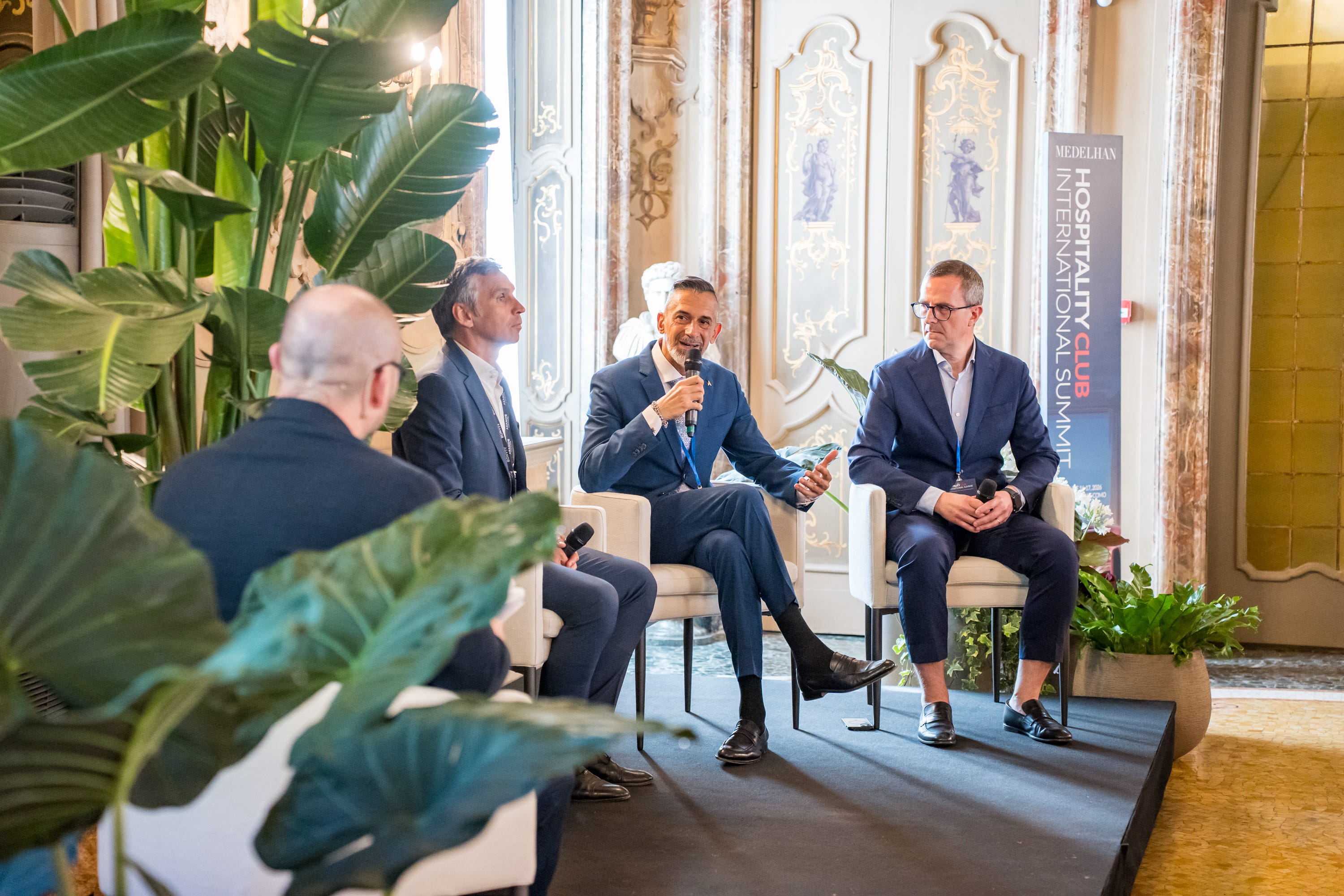
In the afternoon, the design and development conversations became even more layered. “Designing Hospitality for Wellbeing”, with Hembert Penaranda, Andrea Uras and Alessandro Sciarrone, was a useful reminder that wellness is no longer a candle, a massage menu and a rendering of someone looking spiritually fulfilled beside a pool. Wellness has become infrastructure. It touches architecture, MEP, water, energy, maintenance, guest flow, back-of-house planning, operational integration and long-term profitability. A spa that photographs beautifully at opening but becomes expensive, inefficient and underused over ten years is not a wellness strategy. It is a very elegant operational problem.
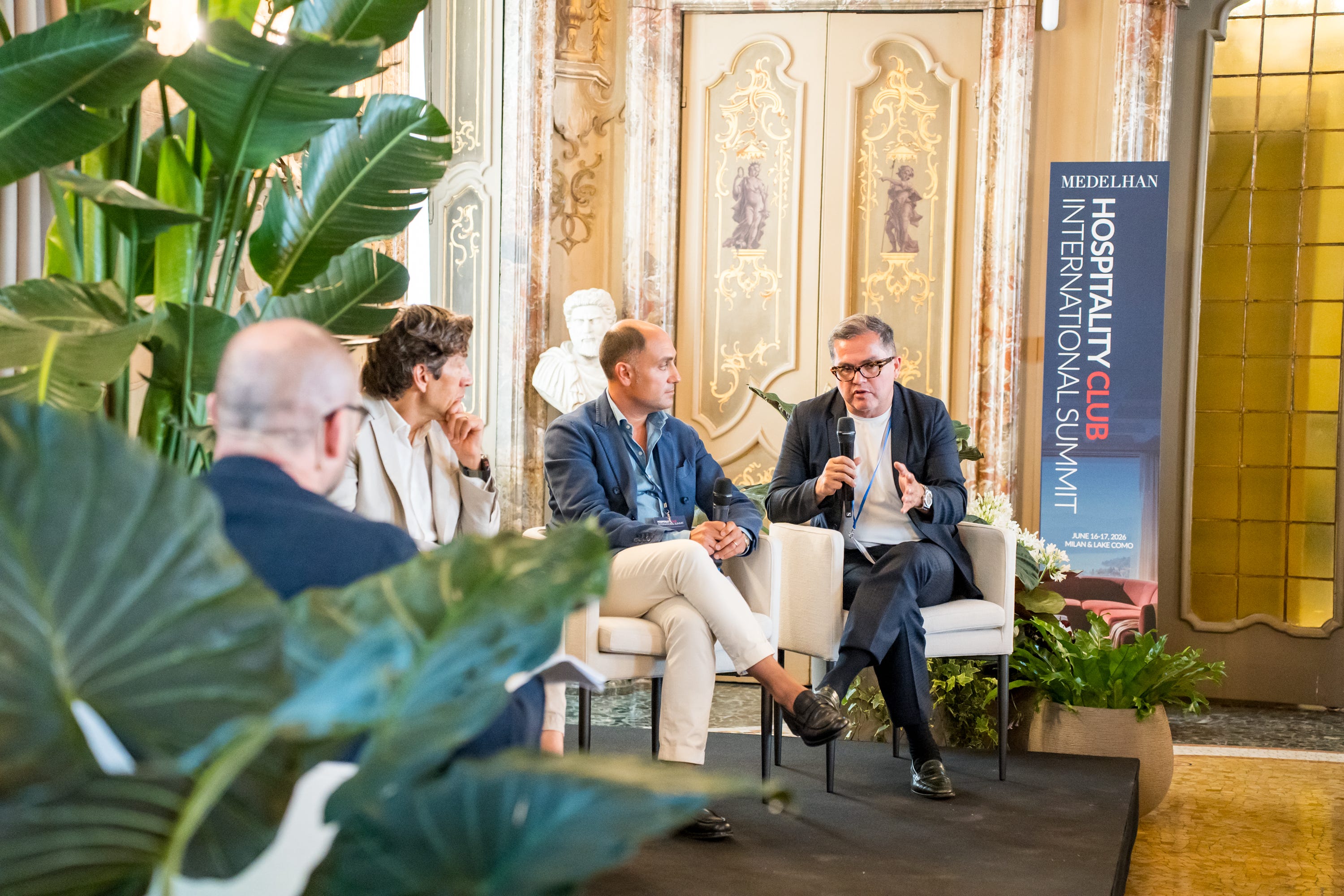
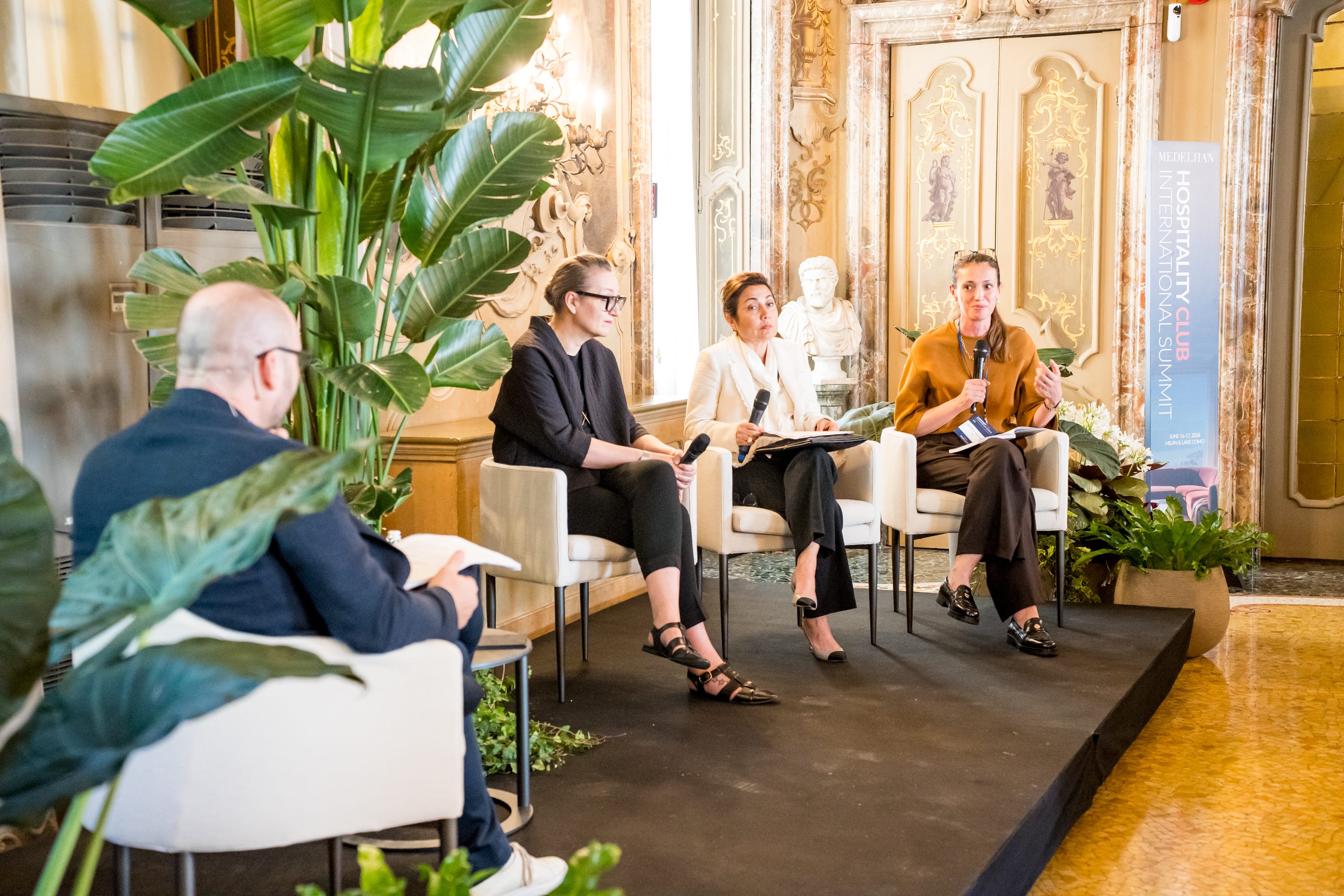
The next panel, “The New Mediterranean Brief for Hospitality Design”, with Sayeli Uysal Ayaydin, Nathmya Saffarini and Tina Norden, addressed one of my favourite current irritations: the déjà vu of quiet luxury. We all know the look by now. Beige confidence. Linen seriousness. Stone with emotional intelligence. A chair that has suffered tastefully. There is nothing wrong with refinement, but when refinement becomes a globally repeatable costume, identity starts to leak away. The strongest point of the discussion was that hospitality design now has to move beyond styling and into resilience, cultural depth, adaptability and long-term performance. A hotel is not meaningful because it looks like a moodboard that went to therapy. It is meaningful when it continues to make sense operationally, emotionally and economically after the first wave of admiration has passed.
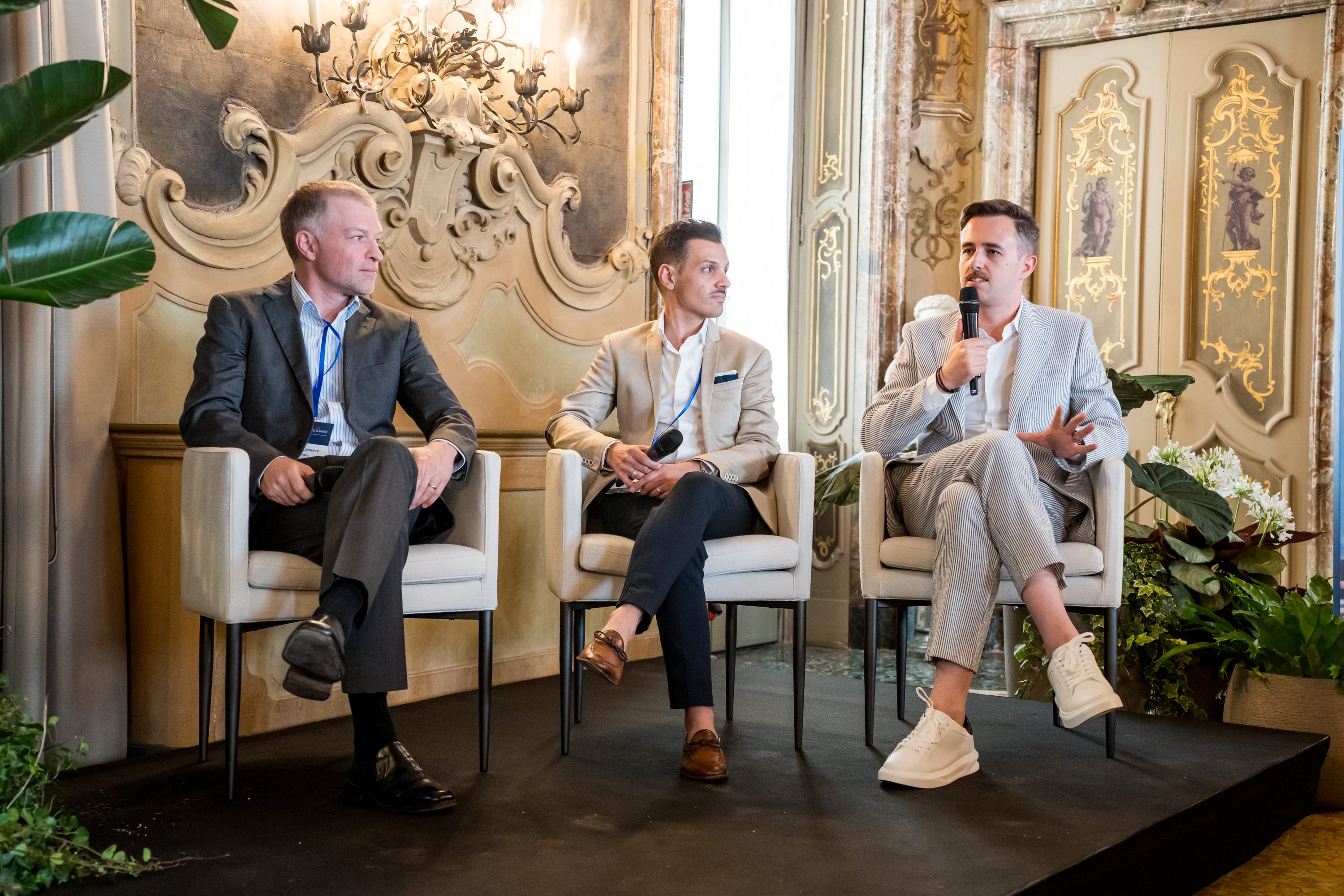
“Storytelling, F&B, and Identity Beyond the Formula”, with Chris Clement, Damien Follone and David Harte, developed this further by asking where hotel memory is actually created. Not in rooms alone. Rarely in corridors. Sometimes not even in the suite everyone posts for precisely nine seconds before moving on. Hotels are remembered through social spaces: the bar that becomes part of a city’s mental map, the restaurant that gives the property a rhythm beyond check-in and check-out, the lobby that behaves less like a waiting room and more like a stage. Storytelling, when done well, is not decoration pasted onto a project at the end; it is a commercial and cultural operating system. When done badly, of course, it becomes a tragic little paragraph in a brand book that nobody reads after launch.
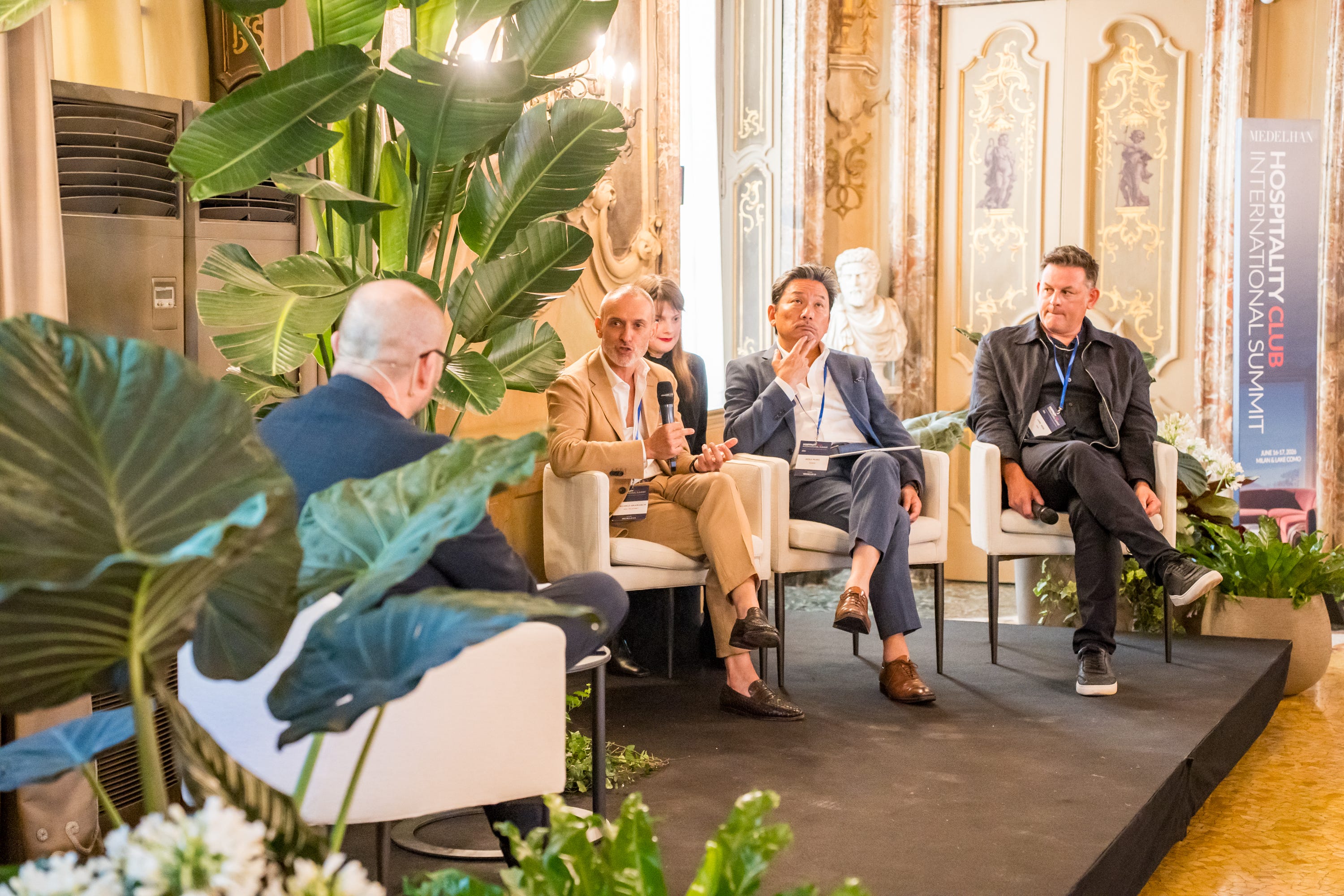
The technology and masterplanning conversation in “Masterplanning, Technology, and Sense of Place”, with Jamie Webb of OBMI, Kenji Muro of GARDE and Piercarlo Gramaglia of VDA Telkonet, raised one of the most important questions for the next generation of hospitality developments: can we improve performance without flattening experience? Smart systems, data, automation and personalisation are now essential tools for energy management, labour efficiency and guest comfort, but technology cannot become the invisible hand that standardises everything into a frictionless international blur. In landscapes like Lake Como and across the Mediterranean, sometimes the most valuable part of a masterplan is not what is built, but what is deliberately left unbuilt. Productive emptiness, if one wants to be poetic; disciplined restraint, if one wants to survive the investor meeting.
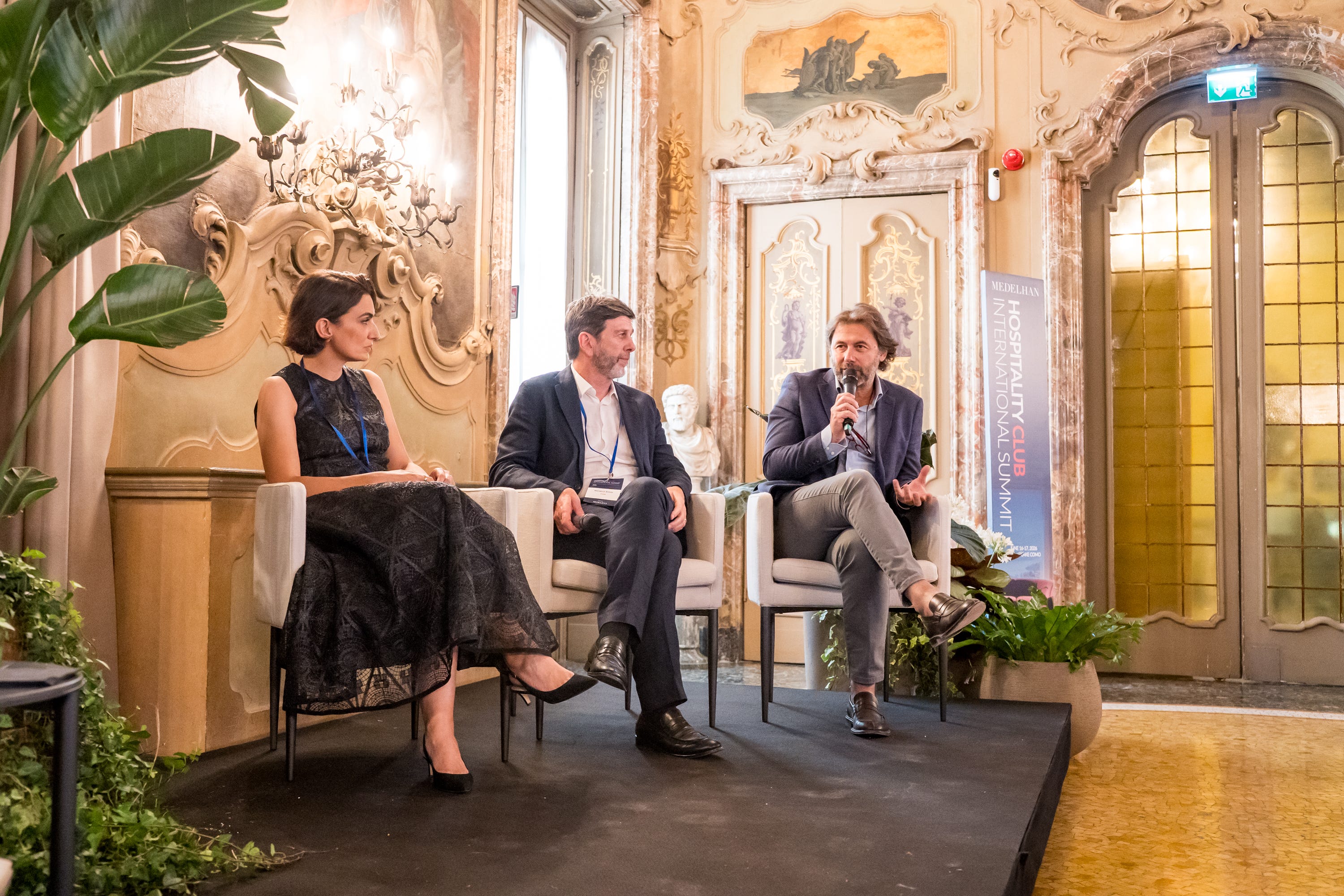
The final panel I moderated, “Reinventing the Icon Without Turning It Into a Museum”, brought the day to its most delicate theme: heritage. With Martina Martino, Head of Projects at Belmond, Michele Rossi of Park Associati and Federico Spagnulo of Spagnulo & Partners, the conversation circled around a difficult but necessary question. How do you update an icon without embalming it? Mediterranean hospitality has no shortage of historic buildings, storied destinations and emotionally loaded assets, but reverence can be as dangerous as aggression. Preserve too much and you create a museum with room service. Transform too much and you produce an expensive betrayal. The best projects understand that heritage is not a dead object to be polished; it is a living system that must be interpreted, adapted and occasionally challenged.
My only real regret is that almost every panel could have entertained my curiosity for hours. This is not something I say lightly, because I have attended enough events to know that many panels deserve compassion, not extension. Here, however, the level of speakers and the quality of the exchange made thirty minutes feel like the trailer for a much longer film. The real success of the summit was that it avoided the two great traps of luxury hospitality events: empty glamour and generic futurism. It was not a parade of people saying “experience” in better shoes. It was a grounded discussion about value, identity, design, operations, capital, technology and the increasingly complex responsibility of developing places that people genuinely desire.
That responsibility is becoming more important. The Mediterranean is not simply a destination anymore. It is a competitive investment region, a lifestyle platform, a wellness laboratory, a branded residence market, a heritage challenge and, if handled badly, a very efficient machine for turning authenticity into pricing. The point is not to reject growth, capital or brands. That would be naïve and, frankly, a little performative. The point is to ask better questions before the money arrives, while the design is still flexible, while the community has not yet been reduced to a “local colour” slide, and while the destination still has the ability to remain itself.
That, to me, is what Medelhan got right. It created the conditions for people who operate at a very high level to speak not only about what is attractive, but about what is sustainable, investable, defensible and meaningful. It reminded us that the future of hospitality will not be decided by the most beautiful rendering, the loudest brand announcement or the most expensive spa menu, but by the projects capable of holding together performance and place, ambition and restraint, global demand and local intelligence.
And yes, the locations were beautiful. Of course they were. This is Italy; beauty has a habit of turning up even when nobody has invited it formally. But the real achievement was that the conversation deserved the setting.
P.S. Over the course of the day, the Summit brought together 11 panels, more than 30 speakers, over 400 participants and almost ten non-stop hours of discussion, which is a rather impressive endurance test for any hospitality audience and, frankly, for any moderator still pretending to have a normal relationship with coffee. It was also a real pleasure to share the day with Marco Colombo as fellow moderator, moving from capital to design, from wellness to technology, from Lake Como to the wider Mediterranean, and watching a room full of people who could easily have stayed at the level of polite networking choose instead to engage with substance, curiosity and generosity. That, more than the numbers themselves, is what made the day memorable.